
Sa. Okt. 24 | 08:49
24.10. | 08:49
|
8°C 
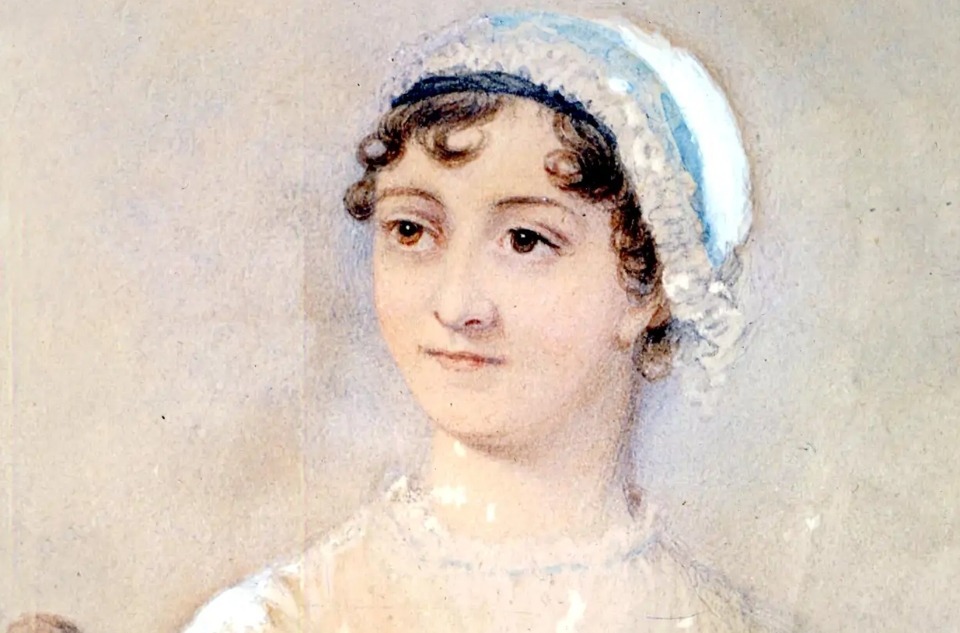
To celebrate Jane Austen's 250th birthday today, we look at the enduring appeal of her work, and the influence of British literature here in central Europe. Regency is quite hyped just now, and the waves have reached us over here.
In partnership with Professor Sylvia Mieszkowski from the English-language Department of Vienna University, and the screenings of so many Austen adaptations at Gartenbaukino, we will make a more unusual, creative stroll through Vienna, and look at why these words still matter, how beautiful they are, why Austen still resonates, and some other books which riff on Vienna, or connect UK and Austria - or just interest us a lot.
One of the obvious reasons for the popularity of English literature is the power of the language, through the dominance of American business and culture. But it is also about the appeal of a certain escapism, of good storytelling, playing with class stereotypes, humour, and alternative romance. When people read Falstaff reviews of food and drinks, or fall down a digital rabbit hole, they are reviving British literature without realising it.
It is remarkable that we are still discussing Austen's novels after 200 years (not many Austrian writers are discussed in this way after so long). She was basically unknown in her own life, even though her sharp criticism of the life for women resonates today (and her face is now on every GBP10 note in UK). We can learn from her about resilience - in fighting illness, poverty, lack of literary recognition and sad romantic days - and therefore how relevant in she is in 2025. Austen achieved all of this without any education after 11 (it seems her spelling and grammar were poor). Her jokes are still funny now. Just like Beethoven, Kierkegaard and we at Whoosh, she used walking as inspiration for deeper thinking and creative development. The large Austen family, with little money, would entertain each other by reading out loud from great literature - and the value of this for us now, is often neglected. We do not know how she looks, and know little about her private life, after her beloved sister Cassandra destroyed her letters (though this was probably a good thing, in the context). Jane Austen has a remarkably broad group of celebrity fans, who say she influenced them, from every walk of life (including Churchill and Darwin).
So what will we visit on this wordy walk? WH Auden, who wrote this passionate poem, died on Walfischgasse. And he gets a reference at the other end of that same street, in Before Sunrise. There is a bust of Shakespeare on the Burg, and Eugene feels that the dramas, manipulation, and even murders of Brexit would have appealed to him. We will discover why Schottenring is called that way, how the Freud family have contributed to British literary life, visit a pub of course, Pickwick Papers (named for Charles Dickens, that committed socialist campaigner and master storyteller), a Graham Greene scene from The Third Man, and speak of lesser-known figures Peter Morgan, Edmund de Waal and Ian Hamilton Finlay, who have all written here. John Lennon, whose lyrics came close to poetry at times - made one of his legendary bed protests with Yoko inside the Sacher Hotel in 1971 (and we will listen to his words there).
Since one of the guides for this walk, Eugene, is of Irish descent, we will also squeeze in some Irish literature, since Bloomsday reflects the global reach of James Joyce (who wrote Ulysses partly in the Austro-Hungarian Empire, in Trieste, 1914-15). Even Robert Burns' events on St Andrew's Day in January are starting to catch on, with Whisky and fiery poetry.
The walk will also feature Emily Bronte and, hopefully, Virginia Wolf. But Rosamunde Pilcher, not so much. And definitely no JK Rowling.
The film Amadeus - which started as a theatre piece in London, was written by a man from Liverpool, Peter Schaffer, and we will quote from the screenplay.
This will be our first literary walk, though we reference books the whole time, on many other themed urban adventures. Please join us...