
Do. Okt. 15 | 15:26
15.10. | 15:26
|
17°C 
The Eurovision Song Contest is the world's largest live music event, watched by 200 million viewers, with 35 countries now taking part. We use this opportunity to recognise the modern diversity of Europe, by looking each year at the country hosting the music festival (our tours so far...Liverpool 23, Malmö 24, Basel 25, Vienna 26).
This May, the event heads south-east, from Austria to Bulgaria, after Dara became the first Bulgarian winner (yay!). Bangaranga, indeed (it is Jamaican patois for "a joyful kind of disorder"). "Her performance is a cross between an AA meeting and The Exorcist, as dancers in plastic chairs twitch and shake to the song's ever-changing tempo. I love it to bits", commented the BBC's Mark Savage.
Her victory was specially significant, since nobody expected it, and Bulgaria had not even participated in the last few years. She won not only the public televote, and the Jury vote, which is from music industry professionals, but also the prize from commentators, for the best staging and choreography. And the song is a banger! Her final score was almost 200 points ahead of Israel, who came second - and if that country had won the competition, it might well have led to the end of Eurovision as we know it, since so few countries would make the trip to Tel Aviv in 2027. Also a big night for the Balkans, generally, with Moldova, Romania and Greece scoring so well. Welcome back!
We will make a pre-party, postmodern comedy tour of the ways Bulgaria has influenced Vienna (and Austrian influence over there), bringing together the Bulgarian community, Whoosh fans interested in a new perspective on their home town diversity, and of course kitsch music lovers. And we have a special guest, to bring insider knowledge, and some of the sounds of their original language (and we love how Cyrillic looks).
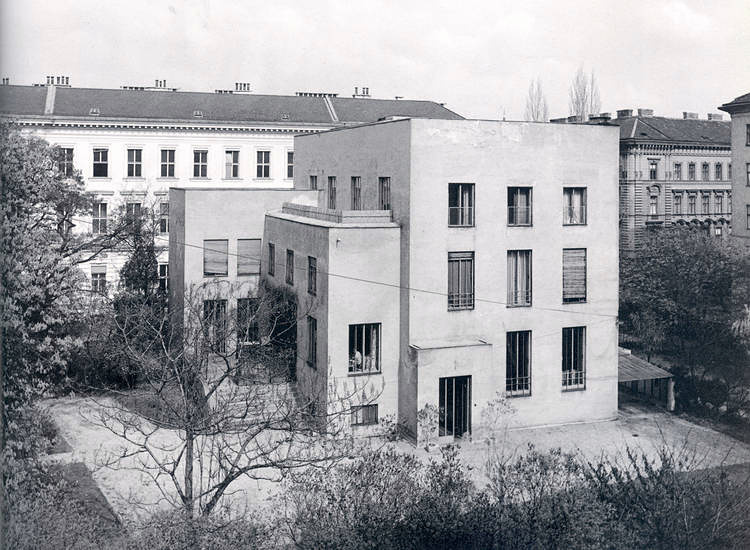
So what is Bulgarian Wien? We start at the house pictured above, from the Wittgenstein family, but now the official Bulgarian Culture Centre in Austria. But also hilarious comedian Todor Ovtcharov on FM4, pop star Bulgarian Car Trader, the Embassy in beautiful Schwindgasse (only street in Vienna with all its original doors from 19th Century, meaning many films are made there), a cute and eccentric shop in Wieden, which is both travel agent and importer of lovely food from Sofia, once a week, when the owner comes back with her favourite seasonal products), and of course the country's worldwide presence is felt with the head of International Monetary Fund, Kristalina Georgieva.
In music, the country is present internationally throughthe groovy Bulgarian Cartrader (Sofia-born, Berlin-based Daniel Stoyanov, but here all the time and on FM4), and so many beautiful, female choirs with harmonied voice. The Habsburgs and Bulgarians disputed how to administer Serbia during the first world war, leading to many atrocities. Ruse city in Bulgaria is known as the little Vienna, because of its architecture. The head of Sociology at Uni Wien, Yuri Kazepov, is an Italian with Bulgarian refugee parents. And Ivan Krastev is a political scientist, the chairman of the Centre for Liberal Strategies in Sofia, permanent fellow at the IWM (Institute of Human Sciences) in Vienna, and a founding board member of the European Council on Foreign Relations, a member of the board of trustees of the International Crisis Group and is a contributing opinion writer for The New York Times. Historian Maria Todorova recently made a famous lecture at IWM in Vienna, about the history of Bulgarian culture in central Europe.Full facts and figures on the Bulgarian population in Vienna to follow as soon as Eugene has researched them.
As lovers of pan-European identity, we celebrate all those Euro moments, like the football Champions League (music by Handel via Brit Tony Britten), Eurovision broadcasting (music by Charpentier), and of course the original European harmony anthem, from Beethoven.
With this tour, we want to update that sense of European harmony through music. We need more cross-border dialogue and understanding, whether it is sport, music or media.
People often make fun of Switzerland - we will explore why that is. And this being a Whoosh tour, we bring our usual mix of politics and ridiculousness. The (cool) Bulgarian music will be loud, across our pilgrimage.
Later on, we get together for a drink in legendary Restaurant Sofia in Margareten, and hopefully later in the day, to watch the Eurovision on a big screen, live from Sofia.
Key semiotics for Eurovision: colourful, cheeky, eccentric, proud, ridiculous, surreal, European, political, musical, camp, freakshow, celebratory, sexy, Conchita.
Everyone knows about Vienna music, palaces and cake, so we need to surprise them instead with new stories: Gay Vienna (which is more and more cool for straight people now; after Conchita, it’s got to be so gay!), humorous Vienna and creative, new Vienna.
This is part of a series of link-ups Whoosh has made, withh Remind em of our success with EU Kulturhauptstadt, a Brexit pub protest that was reported by most Austrian media, an EU benefits tour for 30 years of Austro membership, and collaborations with the Swiss and Swedish embassies for previous Eurovision Contests.